Signed in as:
filler@godaddy.com
Signed in as:
filler@godaddy.com
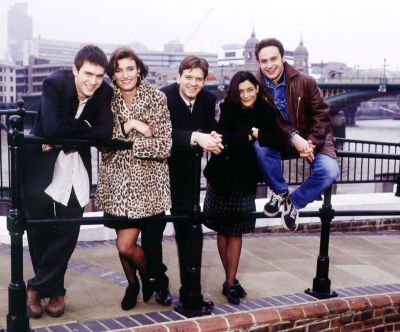
Just before social media changed the world forever, the 1990s was a pivotal decade.
Delve into the fashion, music, politics and social movements of the 1990s through sustained academic study..
Various pathways available through optional modules, culminating in an extended dissertation.


1990s Culture Studies is the interdisciplinary study of the social, political, cultural and technological transformations that shaped the final decade of the twentieth century. Drawing upon history, sociology, media, politics and cultural theory, it examines how the 1990s influenced contemporary identities, institutions, popular culture and the emergence of the modern digital world.
Asynchronous lectures, reading materials and extensive resources are shared on our Moodle platform to which you will be granted access. The course is delivered entirely online, under the guidance of our expert lecturers and academic staff. The academic year begins in September but you can also enter the programme in January.
Broadly similar to a three year undergraduate degree, there are three levels (levels 4 to 6). In level 4 (year 1) you will study four core modules to give you the foundations of culture studies. In year 2 you study at level 5, with further core modules to advance your knowledge, and begin to make choices from our optional modules. In year 3 you will specialise by choosing from a variety of optional modules, and complete your dissertation on a topic chosen in collaboration with the academic staff and your supervisor. The modules are detailed below.
Each 15 credit module is £200, with a 30 credit module costing £400. This includes everything for the module, with no hidden cost. You may choose to purchase the textbooks. The entire programme therefore costs £4800, but you can study a module at a time and exit the programme when you wish. You will receive a certificate for each module, and a certificate of completion should you exit early which summarises the extent of your study.
As these programmes are new, we are offering a limited number of places with a scholarship discount of 80%. T&Cs apply. This is an excellent opportunity to learn something new, and be involved with the development of a new course, at a really low cost. Email us today to find out more (info@wessexacademia.co.uk).
Foundations (120 credits)
Introduces the discipline, its methods and sources, and examines how historians and cultural scholars study the recent past.
Explores the political, social and international developments that defined Britain and the wider world during the decade.
Examines how ordinary people lived during the decade, from education and family life to shopping, technology and changing lifestyles.
Introduces the major cultural forms of the decade, including television, film, music, radio, magazines and celebrity culture.
Developing expertise (90 credits plus 2 options from level 6)
Examines the relationship between popular music, youth cultures and identity in the 1990s, exploring genres, scenes, subcultures and the ways music expressed class, gender, ethnicity, sexuality and belonging.
Explores the transformation of screen and interactive culture during the 1990s through film, television, video games, home computing and emerging digital technologies.
Examines major political and social transformations of the 1990s and their relationship to changing ideas of citizenship, identity, equality, community and social values.
Advanced study and specialisms (75 credits)
Develops the advanced research, methodological and analytical skills required to undertake independent cultural research using textual, visual, material, archival and other cultural sources.
Enables students to undertake a substantial independent research project investigating a self-selected aspect of 1990s culture through sustained critical analysis and engagement with relevant scholarship.
Examines Britpop as a musical and cultural phenomenon and explores its relationship with Englishness, class, gender, nostalgia, politics and constructions of national identity.
Explores representations and performances of gender in 1990s popular music, including feminist interventions, female artists, masculinity, sexuality and the politics of the music industry.
Examines rave, club and electronic dance cultures as distinctive sites of 1990s youth identity, community, consumption, resistance and moral regulation.
Investigates the prominence of conspiracy, secrecy, paranormality and institutional mistrust in 1990s television and considers what these themes reveal about contemporary cultural anxieties.
Uses 1990s television comedy to examine changing representations of class, gender, family, relationships, ethnicity, ageing, national identity and everyday British life.
Examines how mobile telecommunications, multichannel and satellite television, and other emerging technologies transformed communication, media consumption and everyday life in 1990s Britain.
Explores the emergence of the internet and cyberculture during the 1990s, examining early online communities, digital identities, technological imaginaries and changing ideas about communication and society.
Examines representations of crime, disorder and social threat across 1990s news and popular media, considering their relationship with moral panics, public anxiety, policing and criminal justice.
Critically examines the construction of ‘Cool Britannia’ through popular culture, politics, media and branding, assessing competing interpretations of Britain during the later 1990s.
Explores 1990s fashion and consumption as expressions of identity, examining style, brands, advertising, retail culture and their relationships with class, gender, youth and lifestyle.
Examines how identities were constructed, contested and transformed during the decade, with particular attention to changing understandings of class, gender, ethnicity, sexuality, generation and belonging.
Places the decade within a global cultural context, examining transnational media, globalisation and contrasting experiences and representations of the 1990s beyond Britain.
Explores how the 1990s have subsequently been remembered, represented, preserved and reconstructed through nostalgia, museums, archives, anniversaries, popular media and other forms of public history.
Examines environmental concern, scientific and technological change, futurism and millennial anxieties during the 1990s, including the ways approaching 2000 shaped contemporary understandings of both risk and the future.
Optional modules are subject to change.